
Token Flow Analysis
How token flow analysis reads fund movement
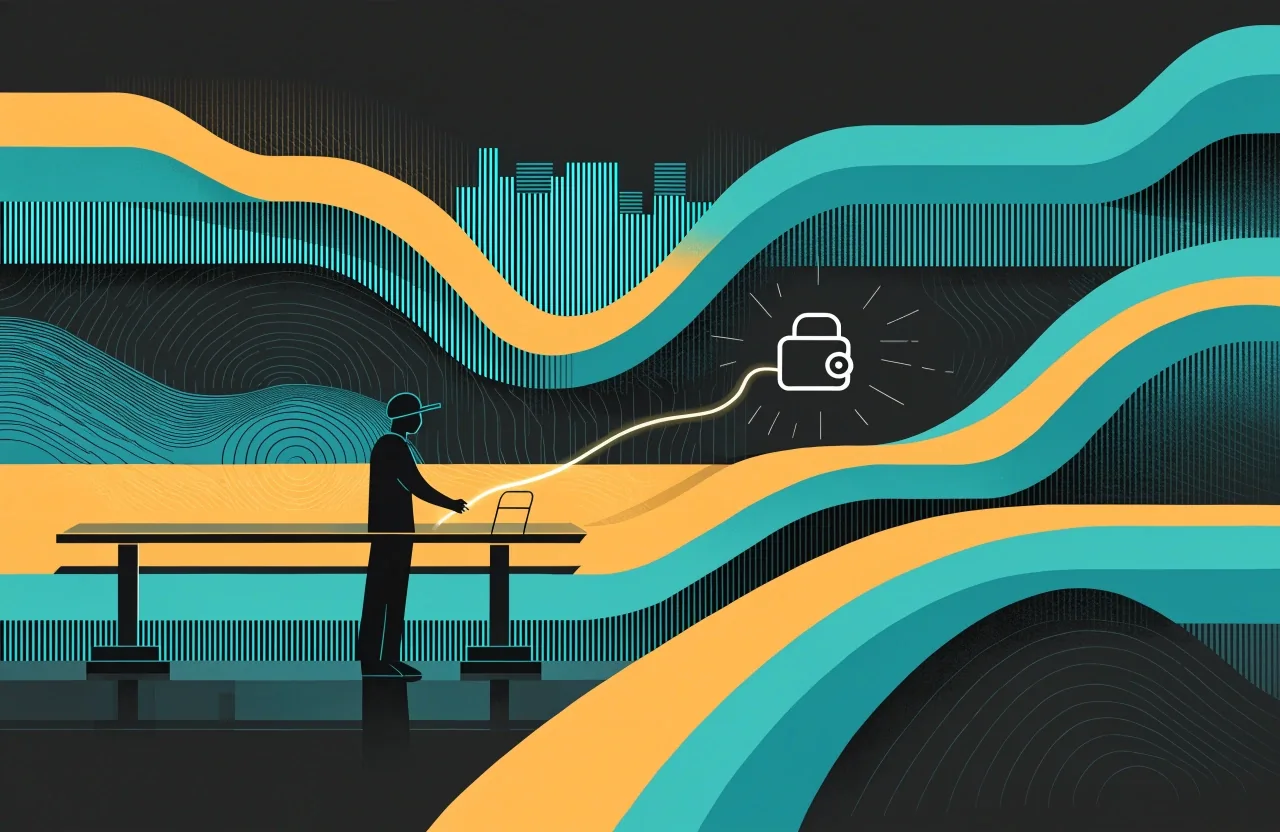
Token flow analysis follows funds as they move between wallets, protocols, and venues, then asks what those movements suggest. The answer is rarely obvious from a single transfer. This page covers exchange inflows and outflows, cross-chain tracing, and the patterns analysts build from fund flow data.
- Exchange inflow
- Source before size
- Exchange outflow
- Cluster the receivers
- Cross-chain hop
- Match bridge windows
- Reading a flow
- Label, cluster, confirm
What a token flow actually is
A token flow is the path funds take from one address to another, sometimes across chains. The simplest version is a single transfer. The version analysts care about is a chain of transfers with a recognizable shape: funding, accumulation, redistribution, and arrival at a venue or a contract.
Keeping the shape in view is what separates useful reading from counting transactions. Two hundred small transfers into one address and one large transfer into the same address can carry the same total value and completely different meaning. Blockchain transaction analysis at that scale is less about tallying and more about recognizing which of the two you are looking at.
Stage 1
Funding
The address gets its first inputs. Where that money came from decides how much weight later movements carry.
Stage 2
Accumulation
Tokens collect and mostly stay put. Long quiet stretches here read differently from constant in-and-out churn.
Stage 3
Redistribution
Holdings spread outward across wallets. Whether those wallets cluster tells you if one actor is moving or many are.
Stage 4
Arrival
Funds land at a venue or a contract. This is where a token flow becomes readable against what the destination does.
Exchange inflows and what they can indicate
Exchange inflows move tokens from private wallets toward venues. They are commonly read as a setup for selling, on the reasoning that funds sent to an exchange are available to trade. That reading is conditional and often wrong in isolation, since deposits also cover collateral, custody moves, and internal reshuffling.
What makes an inflow more meaningful is the source. Inflows from a cluster that has held for months read differently from inflows from a freshly funded address. Pair the flow with derivatives positioning, which is the kind of context CoinGlass and CryptoQuant cover, and the picture sharpens without becoming certain.
Exchange outflows and accumulation reads
Outflows move tokens away from exchanges toward private custody. Sustained outflows are often read as accumulation, on the reasoning that holders are removing tokens from immediate sale. The read has the same weakness as the inflow read: without the receiving wallet's history, you cannot tell a long-term holder from an intermediary handling someone else's funds.
A useful check is whether the receiving addresses cluster. If outflows land across many unconnected wallets, the accumulation reading is broader. If they land in one cluster, it may be a single actor moving custody. Wallet clustering is what turns a pile of receiving addresses into a readable answer.
Wide, unconnected receivers
Reads as broader accumulation
Many wallets with no shared history pulling supply off venues points to a wider group deciding to hold.
One tight receiver cluster
Reads as a custody move
Outflows landing in wallets that share funding or timing point to one actor relocating holdings, not a market shift.
Cross-chain tracing through bridges
Bridges split trails. Funds deposited on one chain arrive on another at an address with no direct on-chain link, so tracing means matching deposit and withdrawal windows and watching bridge contracts. The result is a reconstructed path with a stated confidence level, not a guaranteed connection.
Where a bridge hop cannot be confirmed, the honest note leaves the trail open. Pretending otherwise creates a false sense of continuity that later analysis inherits. A trail that ends with an open question is still useful research; a trail that invents a link is not.
- Step one Anchor the departure. Record which bridge contract the funds entered and the block window they entered in.
- Step two Match arrival windows. Pair the deposit with withdrawals on the destination chain inside a defensible time range.
- Step three Compare amounts net of bridge fees, then test whether the destination wallet matches the sender's pattern.
- Step four State the confidence. If a hop stays unconfirmed, write it down as open rather than closing the trail.
Fund flow patterns worth naming
A handful of patterns recur across tokens and chains. Naming them keeps the read consistent between analysts and between weeks.
Consolidation
Many wallets sending to one. Often a step before a coordinated action, though the action itself may be at a different venue.
Many into oneDistribution
The reverse movement. Inventory is being spread across addresses, which usually means a holder is managing size rather than exiting.
One out to manyLayering
Funds routed through several hops to break a trail. It shows up as unusually indirect paths with no operational reason behind them.
Deliberately indirectBehaviour shifts around known events
Wallet behaviour that changes right before a scheduled unlock, listing, or governance vote. Worth watching, never proof of intent.
Timing changesMulti-venue sweeps
Flows touching several venues inside a short window. Usually worth a closer read, sometimes just routing around liquidity.
Several venuesSeparating flow signals from market narrative
Token narratives spread faster than the data supporting them. A flow that looks like accumulation on a chart may be a bridge fee, a collateral move, or an internal transfer inside one entity. The check is always the same: identify the wallets, test whether they cluster, and confirm the destination.
Market-structure tools add a second check. If on-chain flows suggest accumulation but derivatives positioning points the other way, the disagreement is itself the finding, and it deserves a note rather than a resolution in favor of whichever data came first.
The disagreement is the finding
When wallet behaviour analysis and derivatives data point in opposite directions, note both readings and the date you checked. Do not average them into a single confident call.
Turning a flow read into a repeatable method
Start with a token and a window. Pull the largest transfers. Label the counterparties. Cluster what is not labeled. Trace any flow that crosses a bridge. Write down the conclusion with the confidence you would defend a week later.
That sequence is what the FlowLens research library documents, and what Guides walks through step by step. It is not fast, and it is not meant to be. It is meant to produce a read you can rerun.
What flow analysis cannot tell you
Flows do not reveal intent, and they do not predict price. A large outflow is not a bullish signal by itself; it is a fact about custody. Attributing motive to a transfer is a story, and stories are easy to construct from public data.
The last limit is simpler. Not every relevant move is on-chain. Over-the-counter deals, internal exchange ledger changes, and off-chain agreements leave no trace. Flow analysis covers part of the picture and should be presented as part of it. Presenting it as the whole picture is the most common failure we see.
Questions visitors ask before trusting a flow read
Does a large exchange inflow always mean someone is selling?
How do bridges change token flow analysis?
Where does wallet clustering fit into the read?
Can on-chain analysis predict price?
What does the FlowLens research library document?
Keep reading flows with the same method
The Research section carries the exchange-flow notes this page summarises and the case studies that stress-test the routine. Tools hosts the Wallet Tracker with Wallet Clusters and the AI Activity Summary, plus GMGN and other third-party analytical data sources used as references. Guides builds the tracing sequence step by step in the order it is meant to be run.
FlowLens · 2455 Bennett Avenue, Suite 400, Mountain View, CA 94043 · Monday–Friday, 9:00 AM – 6:00 PM Pacific